
Priority 4a Understand your population, and co-produce interventions
Population health needs analysis was undertaken prior to 2022.
- The Lancashire and South Cumbria ICS covers Blackburn with Darwen, Blackpool, Westmorland & Furness, Lancashire County, and parts of Copeland and Craven.
- There are 3 upper tier authorities, 2 unitary authorities, 16 lower tier authorities, and an ICB in the footprint.
- The LMNS includes 4 maternity and neonatal providers: Blackpool Teaching Hospitals, East Lancashire Teaching Hospitals, Lancashire Teaching Hospitals, and University Hospitals of Morecambe Bay.
- Services in the LMNS comprise 5 obstetric units, 3 alongside birth centres, and 4 freestanding birth centres.
- Women in West Lancashire typically access care at Southport and Ormskirk Hospital, which is associated with Cheshire and Merseyside LMNS.
Children, young people and maternity in Lancashire and South Cumbria
Population overview
- Around 400,000 children and young people (0–19 years) live in the region.
- Age and gender profiles are similar to national averages (49% female, 51% male).
Deprivation and vulnerability
- A higher proportion of 0–19s live in the most deprived areas compared to England overall.
- Under-16s in absolute low income are significantly more prevalent, especially in:
- Blackburn with Darwen
- Blackpool
- Burnley
- Hyndburn
- Pendle
- Preston
- Rossendale
- Homelessness risk is lower than national average, but areas of concern include:
- BwD, Chorley, Rossendale, South Ribble
Maternity care access
- Women in the region have better early access to maternity care than the national average, particularly:
- During first pregnancies
- Among women aged 25–34
- Among White/White British women
Areas for improvement include:
- Women from Central Lancashire
- Women aged under 25 or over 35
- Women of Mixed, Asian, or Black ethnicity
- Women with subsequent pregnancies
Maternity booking trends
- On average, 1,398 maternity bookings per month
- 63% booked before 70 days gestation
- Most mothers are aged 25–34 and from a White background.
Maternity and infant health in Lancashire and South Cumbria
Birth outcomes and neonatal health
- Higher rates of low birth weight babies, especially in Blackburn with Darwen (BwD) and East Lancashire (EL).
- Neonatal mortality (within 28 days) has remained largely unchanged since 2010–2012, with BwD and EL showing higher rates.
- Post-neonatal mortality (28 days to 1 year) has improved significantly — down over 40% since 2010–2012.
- Infant mortality (0–1 year) is in line with national average, but Blackpool and East Lancashire show higher rates, especially in deprived areas.
Birth statistics (2020/21)
- 17,207 women gave birth, with a declining birth trend since 2016.
- 76.8% laboured, and 66.5% received 1:1 care in labour.
Birth types:
- 52.3% spontaneous vaginal
- 34.9% caesarean section
- 11.7% instrumental
- 0.4% breech
Birth settings:
- 80.3% in obstetric units
- 9.3% in triage/assessment
- 4.4% alongside birth centres
- 3.9% freestanding birth centres
- 1.6% homebirths
Most mothers aged 25–34, with fewer multiple births than national average.
Ethnicity and equity
- Lower proportion of births to Black, Asian, or Mixed ethnicity mothers than nationally, though BwD and EL show higher proportions.
- ENABLE study identified key themes around improving perinatal care for BAME women in Lancashire and South Cumbria.
Infant outcomes
- 17,349 live births:
- 90.7% full-term
- 6.6% moderate-late preterm
- 0.8% very preterm
- 0.4% extremely preterm
- 1.5% overdue
Ethnicity of babies:
- 72.3% White
- 15.6% Asian
- 2.1% Mixed
- 1.3% Black
- 1.6% Other
Clinical indicators:
- 2.1% below/on 3rd centile
- 213 babies with Apgar <7 at 5 minutes
- 20 diagnosed with brain injury
Stillbirths
- 73 stillbirths (≥24 weeks); rate of 4.3 per 1,000, in line with national average.
- BwD has a higher rate (6.0 per 1,000); 47% of stillbirths would need to be prevented to meet national target of 2.3.
Infant admissions and A&E
- 55% of infant admissions had zero length of stay.
- 28% from most deprived areas, 75% unplanned/emergency.
- Respiratory diseases account for 26.4% of admissions.
- Blackpool shows higher emergency admission rates.
- West Lancashire has higher A&E attendance, likely due to dedicated children’s A&E.
Maternity care access and vaccination
- Strong performance in early maternity access, especially for first pregnancies and White women aged 25–34.
- Areas needing improvement: Central Lancashire, women <25 or >35, and those of Mixed, Asian, or Black ethnicity.
- COVID-19 vaccination: Just under half of pregnant women have had two doses. Focus areas for messaging:
- Pendle, Hyndburn, West Lancashire, Wyre, Blackpool, Blackburn
- Women under 34
- Non-White ethnic groups
Infant feeding and skin-to-skin contact
- Baby’s First Feed performance is strong overall.
- Blackpool and West Lancashire perform below national average.
- 49.1% of babies had skin-to-skin contact within one hour of birth.
In 2024 a deep dive into booking data was completed (booking means when the pregnant parent had the first appointment with the midwife).
Ethnicity information
Overall, the spread of ethnic group of women being seen at booking reflect the geography population the trust serve.
Approximately 4% of all bookings did not have an ethnicity group recorded within the system. The data indicates that Asian ethnic background women represent a significant proportion of bookings at ELHT and LTHTr, making this the second highest ethnic group attending across all four trusts. In contrast, BTH and UHMB report mixed/other ethnic backgrounds as the second highest category among their attending patients.
Population insights: Lancashire and South Cumbria
- Reproductive age women: 36.2% of the region’s registered female population is aged 15–44, which is generally lower than the national average.
- Ethnic diversity: The majority are White British (87.4%) and Asian/Asian British (10.3%), but these proportions vary widely across districts.
- Language: 7% of women do not consider English their first language (compared to 12% nationally), with district variation from 2% to 17%.
- Deprivation: Twice as many women live in the most deprived areas (22.3%) compared to the national average (11.1%). Blackpool and Burnley have particularly high levels of deprivation.
- Rural challenges: 17.6% of women live in rural areas, facing higher living costs and limited access to services.
- Fertility and growth: Fertility rates are declining but remain above the national average, and population growth is also higher than average.
- Health concerns: Among women with maternity admissions, 22% had a previous diagnosis of depression and 7% had asthma.
- Life expectancy: Many districts perform poorly against the national average for female life expectancy at birth, with persistent inequalities.
These insights highlight the diversity and challenges within the local population, underlining the need for targeted health and social interventions.
Spring North Charity Consortium were commissioned to map community assets across Lancashire and South Cumbria. They directly mapped and captured 462 assets.
Key insights and future focus: Community Asset Mapping
STRENGTHS
- Good amount of virtual/online resources for parents to access -> early help and ease of access to information.
- Visual map shows cluster of services in main towns
- Strong private provider network offering mother and baby sessions, continue to harness this sector to target areas or certain populations.
- Big GP and pharmacy network (over 270) .
- Plethora of sessions, drop ins, activities and playgroups
FUTURE FOCUS FOR DEVELOPMENT
- Onward pathways and options seems more complex and confusing -> barrier for seldom heard communities. E-info for many sessions is outdated.
- Gaps in rural areas and corridor areas between towns
- Not many VCFSE organisations identified as offering maternity or newborn support – either an actual gap or an improvement in their marketing is required -> opportunity to engage better with this sector, building on a place based community offer with a focus on early support to avoid escalation
- Lack in detail, would benefit from improved communication.
- Difficult to find sessions, even via children centres and for the tech-savvy. Continued mapping of these assets and future development of a portal to drive this to be considered.
- Virtually nothing for women and newborns who are Black, Asian or Mixed Ethnicity -> widening inequalities.
- Work with MNVPs to develop network of diversity leads across the system to engage with seldom heard groups.
A baseline assessment of the ethnicity of our maternity and neonatal workforce across Lancashire and South Cumbria has been completed. This looks at the make‑up of staff in each Trust and compares it with the ethnicity of the local population they serve, to help us understand how representative our workforce is of our communities. The assessment shows differences between Trusts, with some areas where the workforce does not yet fully reflect local population diversity. While workforce ethnicity data is still improving in quality and completeness, this baseline gives us an important starting point. It helps us identify where further work is needed and informs actions we are taking with Trusts and staff to promote fairness, inclusion and race equality across maternity and neonatal services.
Putting Families at the Heart of Compassionate, Inclusive Care
Our commitment to compassionate maternity care
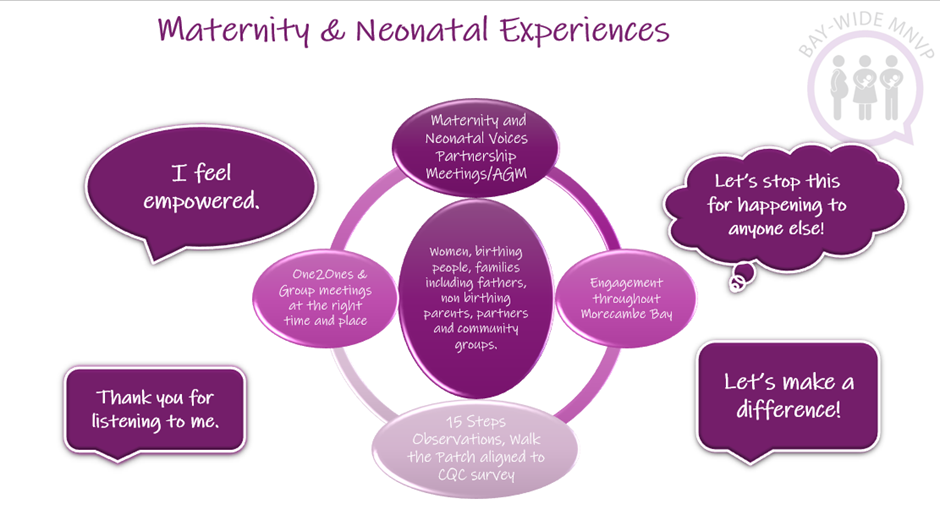
At University Hospitals of Morecambe Bay NHS Foundation Trust, we are dedicated to providing supportive, high-quality, and compassionate maternity care. Our recent initiatives reflect our ongoing commitment to listening to the voices of families and service users, ensuring that every experience is valued and every improvement is shaped by those who matter most.
Bereavement Suite: designed with families, for families
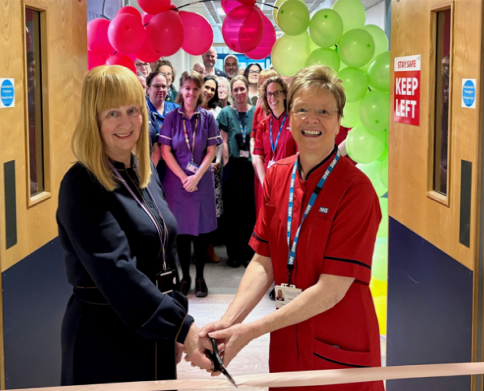
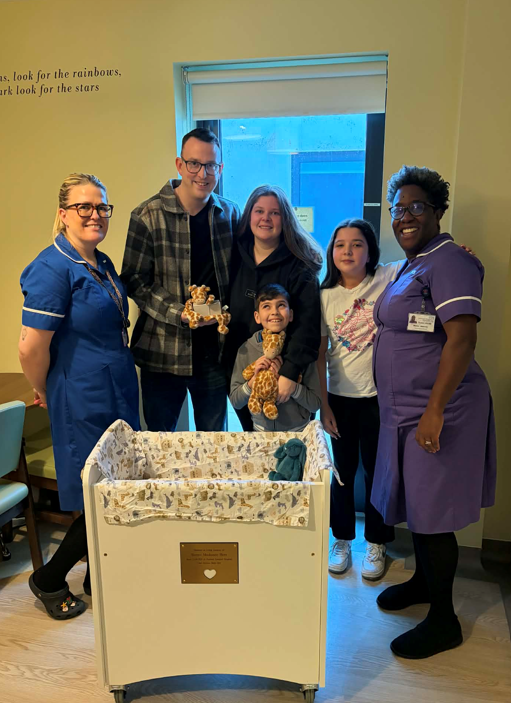
In recognition of the profound impact of loss, we have worked closely with bereaved families to create a new Bereavement Suite. This peaceful, private space has been shaped by the insights and experiences of those who have lost loved ones, ensuring that the environment offers comfort, dignity, and support at the most difficult of times. Their invaluable feedback has guided every detail, from soothing décor to thoughtful amenities, helping others feel cared for and respected during their journey.
Induction of labour: co-producing clear information
We believe the best care is created through collaboration. That’s why our Induction of Labour information is being developed with service users, clinicians, and families. The ongoing filming of our co-produced script ensures that everyone involved has a voice, making the final resource both informative and accessible for those preparing for induction. By working together, we are creating clear, reassuring guidance for every family.
Sonography: improving practice with service user feedback
Hearing directly from service users is essential for meaningful change. In response to feedback, we have introduced a new Standard Operating Procedure for sonography. This update reflects what matters most to those we care for, helping us deliver ultrasound services that are safer, more responsive, and centred on the needs of families.
Learning and sharing: engaging at the NHSE Northwest shared learning event
Our team recently took part in the NHSE Northwest Shared Learning event, where we celebrated achievements and shared best practice with colleagues across the region. We are proud to have been recognised for our work and to have closed the feedback loop by engaging directly with service users. Their perspectives continue to drive our learning and inspire ongoing improvements in communication and care.
Self-reported outcomes: listening, learning, and looking forward
We are working alongside service users to develop new ways of capturing and understanding their experiences through self-reported outcomes and experience measures. This approach ensures that families’ voices are central to how we evaluate and improve our services, shaping our plans for the future.
Supporting choice: advocating for home births
We are passionate about supporting every family’s birthing preferences, including those who wish to give birth at home. Our advocacy efforts aim to empower women and birthing people with safe, informed choices, backed by professional guidance and personalised care.
Co-producing better communication: working with GYT families
Clear, accessible communication is vital in maternity care. We are collaborating with GYT (Give Your Thoughts) families to design a new communication strategy. By co-producing resources, including QR codes for easy access to information and visual aids for better understanding, we are making sure everyone can find and use the information they need, when they need it.
Our Promise: ongoing improvement and inclusivity
We are grateful to every family and service user who has shared their experiences and ideas with us. Together, we are building a more compassionate, inclusive maternity service—one that listens, learns, and evolves to meet your needs. Thank you for being part of our journey towards better care for all.